LUANAR Lecturer Develops User-Friendly Web Application to Make Disease Mapping Accessible to More Researchers
Posted: November 3, 2026 Posted By: Gift Mkwambisi
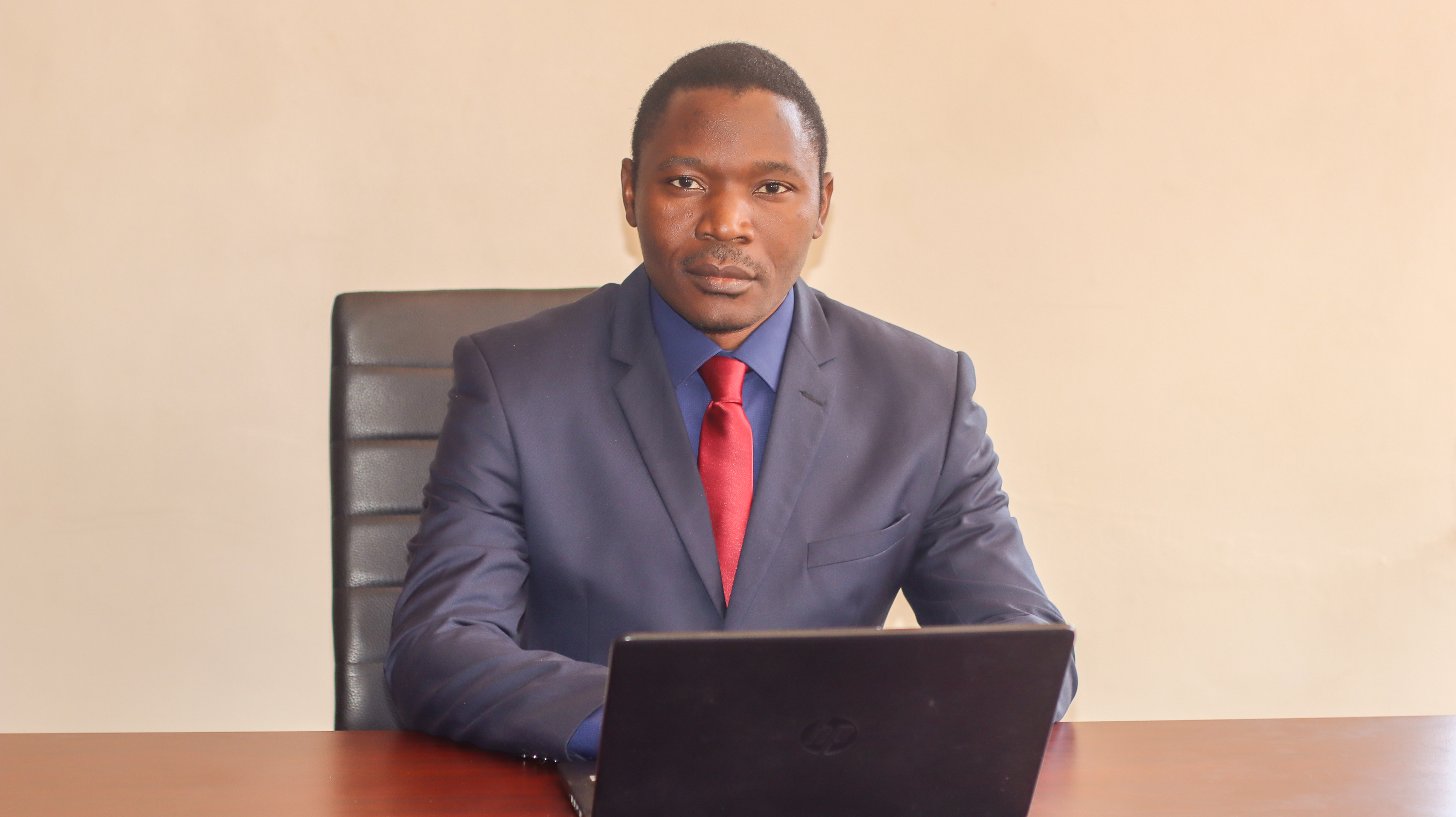
Dr. Alfred Ngwira’s JSTMapp lets epidemiologists and data analysts model and map diseases that affect both animals and humans, without needing advanced programming skills.
Dr. Alfred Ngwira, a Lecturer in Statistics in the Department of Basic Sciences at LUANAR’s Bunda Campus, developed JSTMapp, a web application for joint spatiotemporal disease modelling and mapping. It allows epidemiologists and data analysts to analyse diseases and produce risk maps through a user-friendly interface, without relying entirely on programming.
From the classroom to the field
Dr. Ngwira holds a Bachelor of Science in Statistics and Mathematics and a Master of Science in Biostatistics from Chancellor College, University of Malawi. He completed his PhD in Applied Statistics at Sokoine University of Agriculture in Tanzania, specialising in veterinary statistics and spatial epidemiology.
His focus on animal health was deliberate. “Biostatisticians heavily lean towards human health rather than livestock health,” he explains, leaving much of the sector’s data under-analysed. During his PhD, he set out to develop a joint modelling and mapping application for diseases that affect both animals and humans, such as bovine tuberculosis.
The idea for JSTMapp grew out of his work as a statistical consultant. Again and again, researchers with little or no programming background asked him how to carry out joint disease modelling and mapping. Standard approaches require skill in R programming, which put the method out of reach for many of the people who needed it.
What JSTMapp does
JSTMapp enables analysts to model two diseases together, or one disease across two groups affected by it. In practical terms, it generates the spatial and temporal risk patterns of each disease and identifies both the patterns specific to each and those they share.
As an example, the tool could be used to study zoonotic bovine tuberculosis in cattle and humans across Malawi’s districts from 2020 to 2025. It would produce risk patterns for cattle, risk patterns for humans, and the common transmission patterns between them for each district and year.
The application is built on R Shiny and the INLA Bayesian framework. INLA was chosen for its estimation speed compared with other frameworks such as Markov chain Monte Carlo (MCMC), while R Shiny offered ease of programming and an open server for deploying the application. A first draft took about six months to create, and refining and publishing it extended the work to about a year.
Why it matters for farmers and policy
Livestock disease surveillance is often weak, leaving many areas with missing data. JSTMapp helps by predicting risk in areas without data, based on information from neighbouring areas.
For farmers, the benefits come through animal health experts. When risk maps show areas of increased disease risk, farmers can be warned early and take preventive measures, helping to avoid livestock infections, deaths and the economic losses that follow.
For policymakers, the tool highlights areas of high disease risk, which is especially useful for targeting limited resources. The combined animal-human risk maps can also help stakeholders design integrated One Health systems for disease monitoring and control.
JSTMapp is designed for diseases that affect two groups, such as zoonotic TB, rabies and trypanosomiasis in animals and humans. Its intended users include epidemiologists, animal and human health data analysts, researchers and government research agencies. Early reviews have been positive.
What comes next
Dr. Ngwira plans to extend the application to accommodate outcome data other than counts, and to include multivariate spatial models so that more than two disease outcomes can be modelled together. Although the tool is currently web-based, he hopes to see it transition into a local desktop program, and he is seeking collaboration with computer programmers and data scientists, along with university support for funding these improvements.
JSTMapp was built with a wide audience in mind. “The JSTMapp was developed for any data analyst, everywhere,” says Dr. Ngwira, and addressing the shortfalls he has identified will improve its usability worldwide.
A message to young African researchers
Dr. Ngwira’s reflection on the project is a challenge to the next generation. “Data science should not just exist in the classroom but also beyond it,” he says, helping to solve real-world problems in animal and human health.
He urges young African researchers and data scientists not to learn only for academic qualifications, but to solve societal problems, and to use their own tools, algorithms, models and data that suit their localities rather than importing them from elsewhere.